Every intake measured, every volume recorded, without walking the network
Reading intakes by hand means driving the whole network, writing figures on paper and typing them up later. Between one round and the next, a broken pipe can run for weeks — and the first sign is usually the pumping energy bill.
Datakubo reads every intake on its own. The platform compares the main meter with the intakes below it, warns you when the numbers stop adding up, and keeps a continuous volume record you can export whenever you need it.
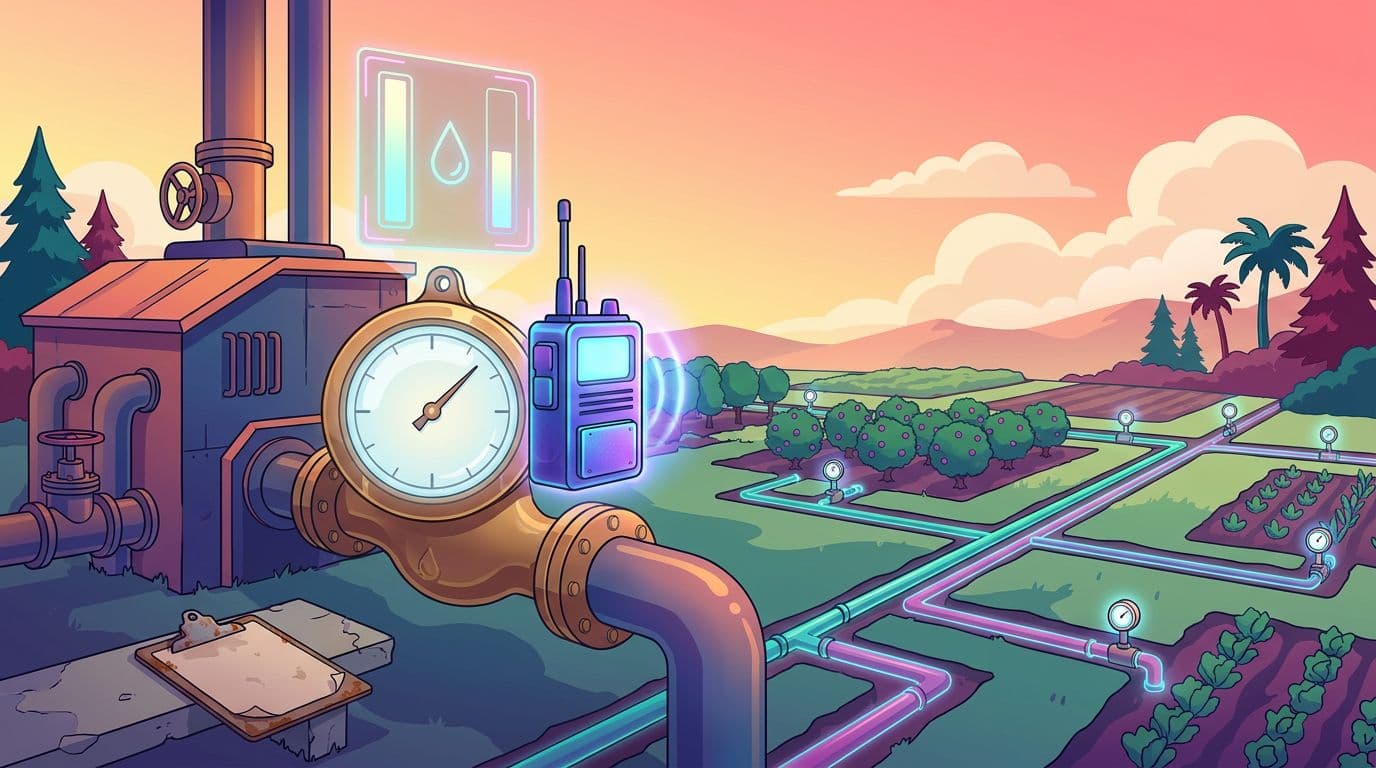
What manual control really costs you
A round of the whole network every time you need figures, forms filled in by hand, allocation between members argued at the assembly, and water lost somewhere in the network with nobody noticing until the energy bill of the pumping station says so.
How it works
Meters that report on their own on each intake
If your intakes still have mechanical meters, an installer from our network fits or swaps them — installer network available in Spain only.
The readings arrive without a single trip
Each intake sends its volume on its own. No rounds, no paper, no typing figures up afterwards.
The platform compares the main meter with the intakes
When what goes in stops matching what comes out, you get a warning — with the intake causing it, not just a total.
You close the period and export the volumes
Volume per intake and per member, in CSV or PDF, ready for your allocation or your reports.
The volume record, kept for you
Your concession requires effective control of the water you take, and the figures have to be reported. The platform logs volume per intake continuously, keeps the history and exports it whenever you need it — instead of a folder of handwritten forms rebuilt from memory at the end of the season. Check with your river basin authority which specific record applies to your concession.
Every member sees the consumption of their own intake
You invite each member by email and they get their own access. From their phone they see their intake, the volume used this period, the day-by-day breakdown and their own alerts. Nobody sees anybody else's water — and a member who can check their own figures does not argue the allocation at the assembly.
What each member gets
- Their own access, invited by email — no passwords to hand out
- Volume used this period and a day-by-day breakdown
- Their own leak alerts, which they can acknowledge themselves
- History from the day they became the holder of the intake
- A member who can check their own figures does not dispute the split
What changes for the community
- No more rounds of the network to read intakes
- Volume per member measured, not estimated
- Leaks in the network caught in hours instead of at the next bill
- A continuous record ready to export at any time
- Pumping watched as well: energy use and running hours
- One place for every intake in the community
What it costs
It costs a small fixed amount per meter per month. A single leak on a main line, caught in hours instead of weeks, usually pays for several years of it — before counting the pumping energy that stopped being wasted.
A real example: 66 meters in one community
AquaLinks connected 66 meters in their first community in 4 days, and now runs three communities and more than 120 meters. The communities they run read their water on their own, settle it without arguments and see a leak the same day it starts.
Do I have to replace the meters on the intakes?
Only if they are mechanical. If your meters already send readings on their own, they connect as they are. If they are read by hand, an installer from our network fits or swaps them — available in Spain only.
Does it work with no mains power or coverage at the intake?
The meters used in these networks are battery powered and reach several kilometres. That is exactly the case they are built for — rural plots with no power and patchy phone coverage.
Can I tell where the water is going missing?
Yes. The platform compares the main meter with the intakes below it, so the gap between what goes in and what is used — the non-revenue water — points at a section of the network rather than at a total.
What is non-revenue water, and how do I measure it on my network?
Non-revenue water is the share of the water you abstract that no intake ever records: the main meter volume minus the sum of the intake meters. Datakubo works it out for you every day, in m³ and as a percentage of the water that entered the network, and separates habitual unmetered use from the loss that has no explanation — which is the part it warns you about. No special meter is needed: an intake only has to report its cumulative total.
Can each member see their own consumption?
Yes. Each member has their own access and sees only their intake — which is what settles allocation arguments at the assembly.
Can I get the volumes out for my reports?
Yes. Volume per intake and per period, in CSV or PDF, whenever you need it — the history stays there.