NB-IoT water meters: remote reading with no gateway
Each meter carries its own SIM and reports over the mobile network. Ideal where a LoRaWAN gateway would only reach one meter.
NB-IoT is the low-power flavour of the mobile network. The meter needs no gateway and no network server: it sends its reading over the cellular network and reaches Datakubo by HTTP, where it becomes consumption, alarms and a portal for every customer.
Last updated:
How the readings arrive
The meter, or its manufacturer’s platform, sends every reading to the Datakubo ingest endpoint. No gateway to fit and no network to run: the mobile operator provides the coverage.
- NB-IoT meterWith its own SIM
- Cellular networkNo gateway
- DatakuboHTTP endpoint
- Your customerTheir own login
What your NB-IoT meter needs to connect
- An HTTPS POST to https://api.datakubo.com/api/v1/ingest/water-consumption, with your organisation’s X-API-Key header.
- A JSON body shaped like ChirpStack v4 or The Things Network v3: Datakubo detects the format on its own and rejects anything else.
- The meter’s cumulative reading in m³ (field cumulativeFlowM3) and its 16-hex-character identifier (devEui). Battery, alarms and coordinates are optional.
- If the meter or its platform sends another format, you need a step in between that translates it (your middleware or the manufacturer’s platform). Send us a sample and we will look at it.
Full fields and examples in the webhook format.
Compatible NB-IoT meters
- Documented integration
- Own page, decoder, the manufacturer’s alarms turned into alerts, and a setup guide.
- Compatible
- Works through the standard path — ChirpStack or TTN JSON — with no model-specific work.
- Custom
- Not supported yet: we write the decoder for free within 24 hours.
4 results
| Meter | Use | How it reaches Datakubo |
|---|---|---|
Other NB-IoT meters Compatible | SIM-based meters | HTTP POST to the ingest endpoint, as ChirpStack or TTN JSON |
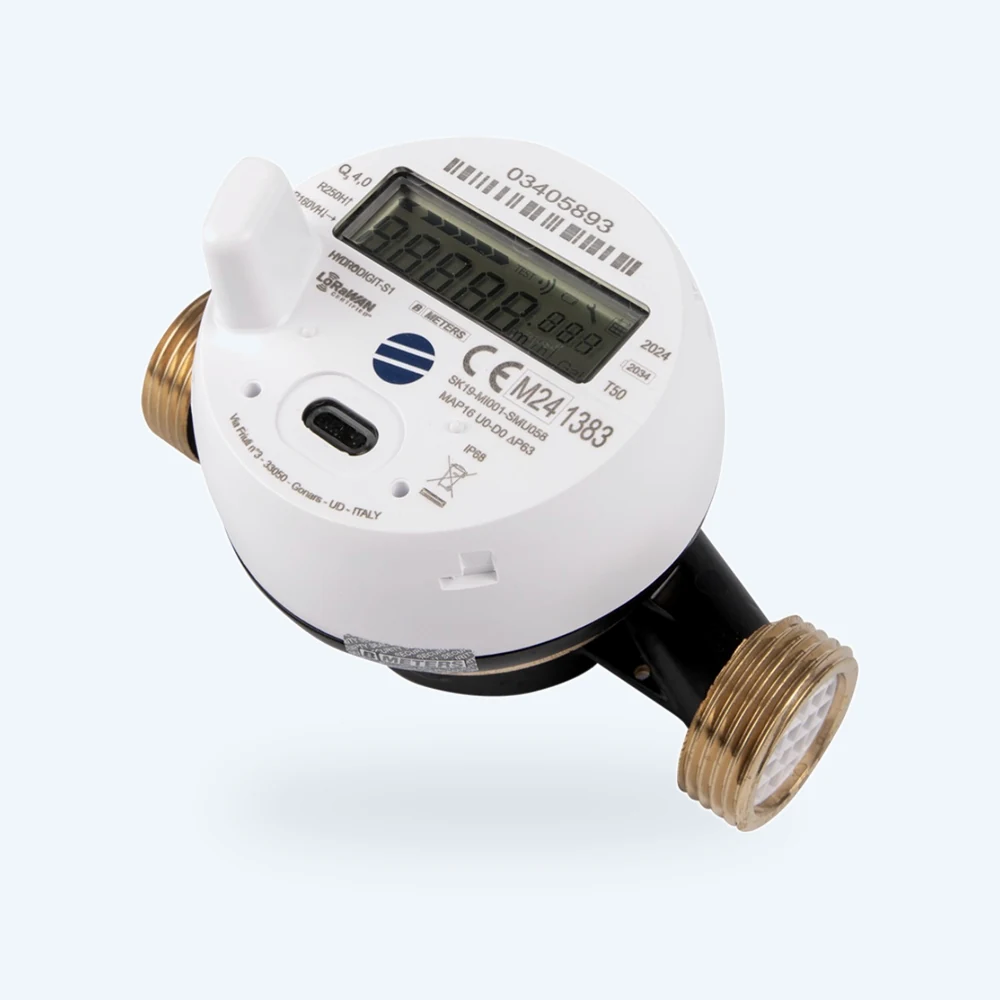 B Meters Hydrodigit-S1 Custom LoRaWAN with Datakubo’s own decoder: it is the meter in the AquaLinks case study (66 meters in one community). B Meters builds the NB-IoT version to order and it is not connected yet; we write its decoder for free within 24 hours. The Wireless M-Bus version is not read directly. | Apartment meter, cold and hot water | LoRaWAN: TTN, ChirpStack or an all-in-one gateway. NB-IoT: built to order, custom connection. |
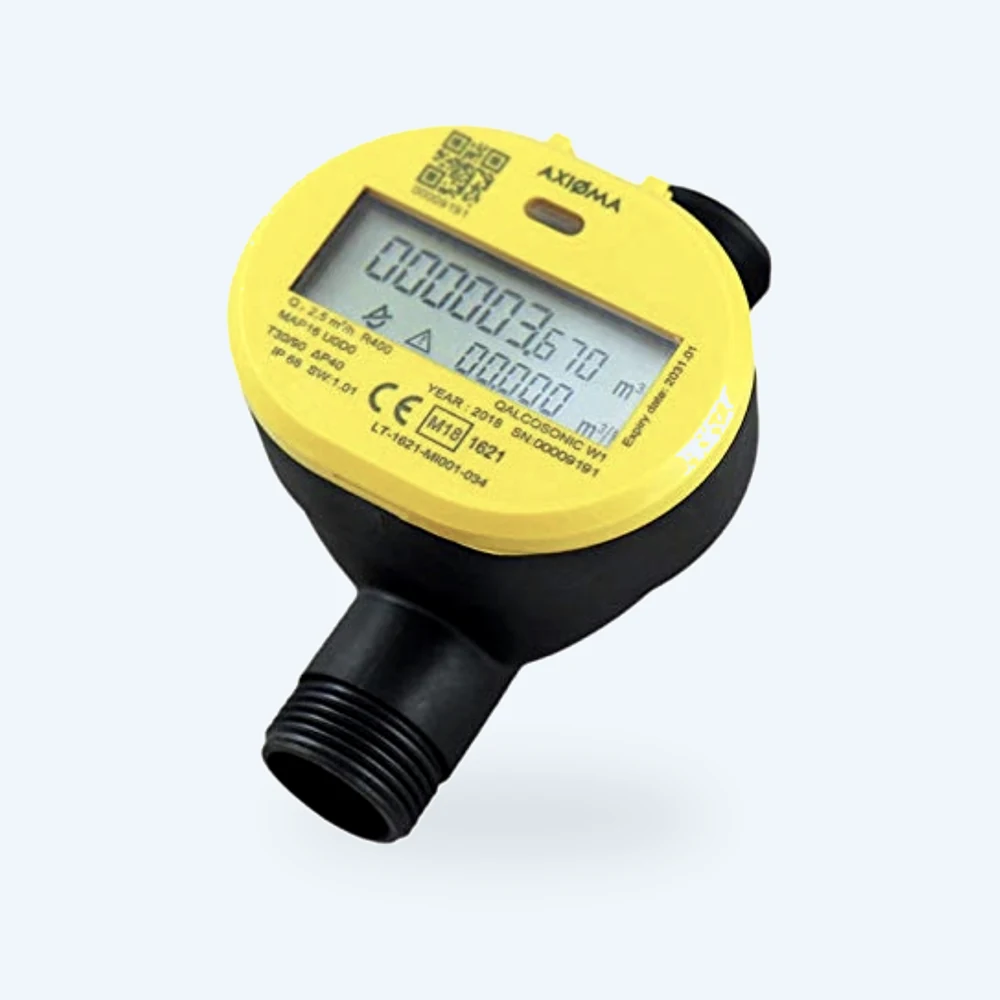 Axioma Qalcosonic W1 Custom The LoRaWAN version also carries Wireless M-Bus and both radios run at the same time; Datakubo reads the LoRaWAN one, with a step-by-step setup guide. The NB-IoT version does not send ChirpStack or TTN JSON: we build its connection for free within 24 hours. As the bulk meter of a zone, it is compared with the sum of the apartments to catch losses. | Ultrasonic meter for apartments and bulk lines (risers, irrigation) | LoRaWAN: TTN, ChirpStack or an all-in-one gateway, with the manufacturer’s decoder. NB-IoT: custom connection. |
Your model, if it is not listed Custom | Any meter that already transmits | Send us the model and a sample uplink; we write the decoder for free within 24 hours |
Other NB-IoT meters
CompatibleNB-IoTSIM-based meters
HTTP POST to the ingest endpoint, as ChirpStack or TTN JSON
B Meters Hydrodigit-S1
CustomNB-IoTApartment meter, cold and hot water
LoRaWAN: TTN, ChirpStack or an all-in-one gateway. NB-IoT: built to order, custom connection.
LoRaWAN with Datakubo’s own decoder: it is the meter in the AquaLinks case study (66 meters in one community). B Meters builds the NB-IoT version to order and it is not connected yet; we write its decoder for free within 24 hours. The Wireless M-Bus version is not read directly.
See integration →Axioma Qalcosonic W1
CustomNB-IoTUltrasonic meter for apartments and bulk lines (risers, irrigation)
LoRaWAN: TTN, ChirpStack or an all-in-one gateway, with the manufacturer’s decoder. NB-IoT: custom connection.
The LoRaWAN version also carries Wireless M-Bus and both radios run at the same time; Datakubo reads the LoRaWAN one, with a step-by-step setup guide. The NB-IoT version does not send ChirpStack or TTN JSON: we build its connection for free within 24 hours. As the bulk meter of a zone, it is compared with the sum of the apartments to catch losses.
See integration →Your model, if it is not listed
CustomLoRaWAN / NB-IoTAny meter that already transmits
Send us the model and a sample uplink; we write the decoder for free within 24 hours
Can’t find your meter? Send us its datasheet and payload decoder, and we’ll add it.
Send the datasheetHow to connect your meters to Datakubo
Six steps, the same ones you will see in the dashboard.
Create your account
At app.datakubo.com/signup, with a 30-day trial and no card. The setup wizard walks you through the next steps.
Copy your API key
In the dashboard, Settings → API Key. It is the
X-API-Keyheader that identifies your organisation. It is shown once: keep it safe.Prepare the meter’s upload
The meter, or its manufacturer’s platform, has to send JSON shaped like ChirpStack v4 or TTN v3. If it sends another format, you need a step in between that translates it.
Point the webhook at Datakubo
URL
https://api.datakubo.com/api/v1/ingest/water-consumption, method POST and theX-API-Keyheader. On TTN it is a custom webhook; on ChirpStack, an HTTP integration; on an all-in-one gateway, its HTTP forwarding. Fields and examples in the webhook format.Check the meters in Devices
Each meter appears on its own with its first uplink, with no registration form. Compare the reading with the meter’s display and give it a name people recognise (flat 3B, riser C).
Assign and invite
Create the community in Customers, assign each meter to its home in Devices, add your logo and colours in Settings and invite the management and every resident.
Before you connect: check your webhook
If a meter shows up with no readings, it is almost always a decoder field name. Paste a sample webhook into the payload checker and it tells you which field is missing and what it should be called.
Rather do it together? Book 30 minutes and we connect your first installation with you.Full guide
When to choose NB-IoT
- Scattered meters: farms, wells, isolated houses or sprawling developments.
- You cannot fit a gateway with power and internet on site.
- The operator has good NB-IoT coverage in the area.
With many meters close together, LoRaWAN is usually cheaper: one gateway instead of a SIM per meter. Full comparison in the LoRaWAN vs NB-IoT guide.
NB-IoT water meters FAQ
Does an NB-IoT meter need a gateway?
No. The meter reports over the mobile network and reaches Datakubo by HTTP, as ChirpStack or TTN JSON. Each meter carries its own SIM.
Which NB-IoT meters work with Datakubo?
Any NB-IoT meter that can send its readings over HTTP as ChirpStack or TTN JSON, directly or from its manufacturer’s platform. For models that send another format, such as the Axioma Qalcosonic W1 NB-IoT or the B Meters Hydrodigit-S1 NB-IoT, we build the connection to order.
Can I mix NB-IoT and LoRaWAN meters?
Yes. They land in the same account and the same portal; your customers do not see the difference.
How much does it cost?
The platform, from €49/mo with 20 meters included. Each meter’s SIM and data plan come from your operator.
Keep reading
- Integrations and compatible metersEvery model, protocol, manufacturer and network server Datakubo reads.
- LoRaWAN water metersWith TTN, ChirpStack or an all-in-one gateway.
- Guide: LoRaWAN vs NB-IoT for water metersCoverage, cost per meter and when to pick each.
- Software for water meter installersA branded portal for every customer, from €49/month.